


The global race for critical minerals has accelerated sharply over the past decade, driven by the energy transition, electrification, digitalisation and rising geopolitical competition.
By Standard Bank Corporate and Investment Banking South Africa
According to the International Energy Agency, projects that demand minerals essential to clean energy technologies could rise two to sixfold by 2040, depending on the ambition of climate policies. This anticipated surge has transformed critical mineral strategies from a niche policy issue into a central economic and security priority.

Africa sits at the centre of this shift. The continent holds an estimated [30%] of global mineral reserves, including dominant shares of platinum (over 70%), palladium and rhodium (over 40%), manganese (over 40%), cobalt (around 70%), chrome (70%) and significant endowments of copper, titanium, bauxite, lithium, rare earth elements and vanadium.
Despite this, Africa captures less than 10% of global mining value added, underscoring the persistent gap between resource endowment and economic benefit. Against this backdrop, African countries are increasingly seeking to redefine what “critical minerals” mean, not through the lens of import dependence, but through development impact.
How Africa is reframing “critical minerals”
In the main, critical minerals lists are typically defined by supply risk and industrial vulnerability. The European Union currently lists over 30 critical minerals, while the United States updates its list every three years based on defence, manufacturing and technology needs.
NATO defines critical minerals based on supply risk to weapons/ arms manufacturing. Africa’s emerging definition is strategic. It places emphasis on:
• Minerals that anchor industrialisation and beneficiation.
• Inputs critical to energy systems, transport and agriculture.
• Resources that can support regional value chains, not just exports.
This reframe is visible in national strategies. Countries such as South Africa, Namibia, Zimbabwe, the Democratic Republic of Congo, Zambia and Ghana have all updated or signalled updates to mineral and industrial policies to explicitly link mining to downstream processing, localisation and manufacturing.


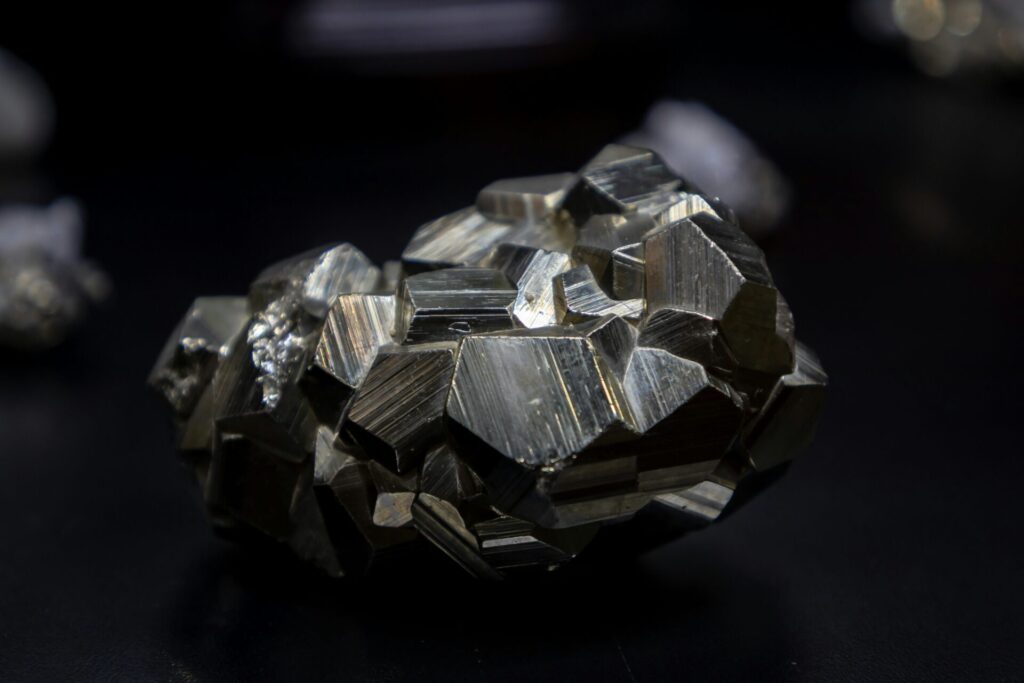
Global demand vs continental priorities
Global demand remains the dominant driver of investment. Lithium demand alone is projected to grow more than sevenfold by 2030, while copper demand for power grids, electric vehicles and renewables is expected to rise by 40% to 50% over the same period. Africa is well-positioned to supply these minerals, particularly as buyers seek to diversify away from concentrated supply chains.
However, Africa’s policy challenge is aligning this demand with domestic priorities. Historically, mineral exports have accounted for 60% to 80% of exports in many resource-rich African economies, while downstream processing has remained limited. For example, Africa produces most the world’s cobalt but refines less than 10% of it locally.
Redefining critical minerals allows governments to shift negotiations with investors and trading partners, from access to resources alone, toward broader economic participation.
Transformative opportunity or financial risk?
If the continent gets the reframe right, the economic upside is significant. Downstream processing can increase the value of mineral exports and can be multiplied between two and 10 times, depending on the stage of beneficiation. Some of the more tangible examples include battery precursor manufacturing, metal refining and component fabrication also generate significantly higher employment and fiscal multipliers than mining alone.
Strategic opportunity or managed risk?
That said, the risks involved with a focus on critical mineral beneficiation are substantial and cannot be overlooked. Processing facilities are capital-intensive, energy-hungry, and sensitive to scale and technology. Refining lithium, copper or rare earths requires stable electricity, water security, logistics infrastructure and skilled labour – constraints that remain binding in parts of the continent.
There is also market risk. Critical minerals are exposed to global price volatility and technological substitution. For example, we have seen an ongoing uncertainty in the demand of cobalt as battery chemistries evolve. Over-concentration on a narrow set of “transition minerals” could introduce fiscal and balance-of-payments vulnerabilities.
Beyond cobalt, lithium and PGMs
Africa’s strategic opportunity lies in broadening the definition of critical minerals beyond headline commodities. Copper, manganese, graphite, phosphate rock, potash, vanadium and industrial minerals play critical roles in power systems, fertilisers, steel and manufacturing. Some of these minerals are less geopolitically sensitive but more economically stabilising. Fertiliser minerals, for example, directly affect food security and import substitution. Manganese and vanadium underpin grid-scale energy storage and steelmaking, offering longer-term demand resilience. A diversified critical minerals framework reduces exposure to hype cycles while strengthening domestic industrial linkages.
Financing Africa’s shift from extraction to industrialisation

Essentially, the financial industry is assigned with the pivotal role of determining whether Africa’s mineral wealth fuels long-term development or remains trapped in raw export cycles. Their influence extends beyond providing capital. They shape project bankability, infrastructure readiness and value chain integration.
Enabling bankable processing and refining projects. Banks can accelerate the shift from ore to industry by financing smelters, refineries, precursor facilities and mineral based manufacturing. These projects often require long dated capital, sophisticated risk assessment and strong ESG governance, areas where banks bring deep expertise. Building the infrastructure that unlocks value. Energy reliability, rail, ports and corridor infrastructure determine whether beneficiation is competitive.
Banks play a critical role in structuring blended finance models and private public partnerships to fund this backbone. Aligning capital with industrial strategy. By prioritising financing that supports value addition, regional supply chains and local content, banks help ensure that mineral wealth supports inclusive economic growth rather than short-term export revenue.
The local processing test
Ultimately, Africa’s critical minerals redefinition will be judged by outcomes, not declarations. Today, the continent still exports most of its minerals in raw or minimally processed form. Moving the needle on local processing would signal a structural break from the past.
This shift does not require full vertical integration everywhere. Strategic sequencing – starting with refining, smelting and intermediate products offers a more realistic pathway. Success will depend on regional cooperation, energy reform and disciplined industrial policy.
Africa’s redefinition of critical minerals reflects a growing recognition that geology alone does not guarantee development. In a world of rising mineral scarcity and supply-chain anxiety, the continent holds genuine leverage. Whether that leverage translates into sustained growth, fiscal resilience and industrial capability will depend on execution – anchored in data, policy coherence and long-term strategy rather than short-term commodity cycles.
As an organisation that believes wholeheartedly in Africa’s growth, we believe that the redefinition will be a success. That success will ultimately drive impactful change that will reach every corner of the continent.

Written by Thapelo Moamogoe, Executive Head of Metals & Mining at Standard Bank Corporate and Investment Banking (CIB), South Africa.