


Where Industry 3.0 related to optimisation and automation of organisational resources, Industry 4.0 is about inter-organisational value chain innovativeness, technologies, digitisation, product creativity, supporting services systems and competitiveness of an organisation’s resources.
By Professor Pieter Steyn, Principal, Cranefield College
Together with partners innovative inter-organisational value- and supply chains are created operating in a global collaborative business ecosystem. Primary drivers and causes of these changes lie in the rapid development, availability and affordability of modern key enabling technologies that are knowledge intensive and associated with high research and development intensity, rapid innovation cycles, high-capital expenditure and highly skilled employees. The essence of modern key enabling technologies is overall digitisation, and organisational transformation is profoundly driven by it. This includes information and communication technologies (ICT) that muster the introduction and integration of new business models of horizontally structured supply and value chains.

Moreover, to achieve success organisations are compelled to transform and change by abolishing bureaucratic practices and structures while adopting knowledge-based learning paradigms and designs in the fourth industrial revolution (Industry 4.0). It demands exceptional governance, supported by transformational leadership excellence and sound knowledge of systemic programme management. Effective and efficient cross-functional and interorganisational management of operations in virtual networks of partners (VNPs) emerged as a critical enabling competency for entities. This is centred on people, relationship building and collaboration.
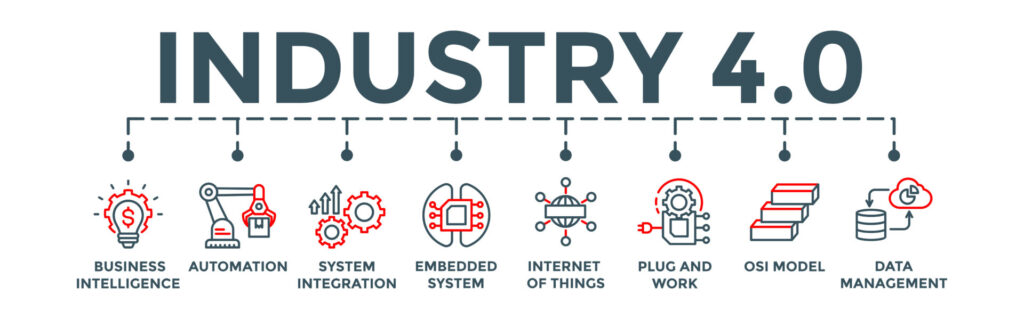
The complexity of modern technologies such as AI, ICT, mass data, Internet of Things, robotics and information and operations technology call for specialisation and sustainable collaboration among partner organisations and demands exceptional talents and well-educated human resources. Organisational design, development and governance now face a challenging new phase.
Entities experiencing a dearth of transformational leadership have difficulty in maintaining and improving their levels of productivity and strategic benefit realisation. Where transformational leaders are on board a shift away from old motivations of bureaucratic powers towards inspiring people to believe in a vision of economic and social progress. Such entities balance their attention between actions that create progress, and the motivation of virtual network team members.

In the new dispensation, leaders and managers have a duty to ensure that design for customer needs delivers a competitive advantage. In the Industry 4.0 economy an effective and efficient design capability has emerged as an important competitive key success factor due to the advent of modern process technologies and virtual partner networks.
Product, service and process design and development have become complex and sophisticated competitive factors. When creation of the product or service is completed and a commercialisation strategy for its production and marketing been established, attention is turned to designing and developing the operational process for order fulfilment. Product, service and process design and development are best achieved by utilising a supply chain-based cross-functional project and programme management approach.
Partnering has become fundamental in the Industry 4.0 economy. Partner organisations come from small, medium and large-sized organisations. Great opportunities are emerging for the creation of new small and medium-sized entrepreneurial enterprises. This boosts much needed job creation opportunities and grows the economy in the right direction. Importantly, it dispels the notion that modern technology will lead to job losses (after all the steam engine led to massive job creation in the Industry 1.0 economy).

Entrepreneurship has a pivotal and highly important role in Industry 4.0. Entrepreneurs use creative faculties to generate new products and services. Moreover, they exploit a new generation of opportunities in the developing collaborative market.
Modern technologies and its effect on product, service and process design have a significant influence on how the Industry 4.0 organisation is shaped, led, managed and governed. Consequently, organisations are compelled to abandon bureaucracy in favour of knowledge-based learning paradigms and structures.
Human talent must be better educated and skilled to cope with the new situation. Processes are structured cross-functionally and programme-managed. Cross-functional processes incorporate collaborative virtual networks of partners to improve organisational effectiveness and efficiency, leading to much improved competitiveness. Moreover, partnering boosts small and medium sized enterprise creation and concomitant job creation. The resulting transformation and change hold profound benefits for organisations and society.

GET EDUCATED FOR INDUSTRY 4.0
Cranefield’s courses are designed to serve organisational leadership, management and governance needs of the Industry 4.0 economy. Learn
to achieve organisational performance excellence through programme-managing cross-functional and interorganisational supply chain and project activities. What you learn today, you apply tomorrow. The mode of delivery is live online technology-enhanced distance learning.

New enrolments each quarter
• PhD in Commerce and Administration
• Master of Commerce in Programme Management
• Postgraduate Diploma in Programme Management
• Advanced Diploma in Project Management
• Bachelor of Business Administration (BBA)
• Advanced Certificate in Project Management
• Short Courses
• Continuing Professional Development (CPD) Short Courses
• In-house Programmes (Executive and other)
For more information about our qualifications visit: www.cranefield.ac.za